Best Bunka Knife 2026: K-Tip All-Rounders by Budget
Basis Spec comparison · not hands-on tested
How we chose: makers' published specs, materials and price. We have not used these products ourselves. How we test
QUICK ANSWER
For most home cooks the Tojiro DP Bunka 165-170mm (~$80-100) is the best first bunka; step up to a Sakai Takayuki Ginsan or MAC for a lifetime knife (~$140-200), or a hand-forged Masakage for a pro-leaning blade (~$250-400).
A bunka is a double-bevel all-rounder — essentially a santoku with a pointed reverse-tanto (k-tip) instead of a rounded nose. The flat profile push-cuts vegetables like a santoku; the sharp tip adds precision for detail work. Choosing bunka over santoku is mostly tip style and preference, not a performance gap.
- Best first bunka
- Tojiro DP 165-170mm
- Best lifetime
- Sakai Takayuki Ginsan / MAC
- Tip style
- Reverse-tanto (k-tip), double-bevel
- Typical length
- 165-180mm
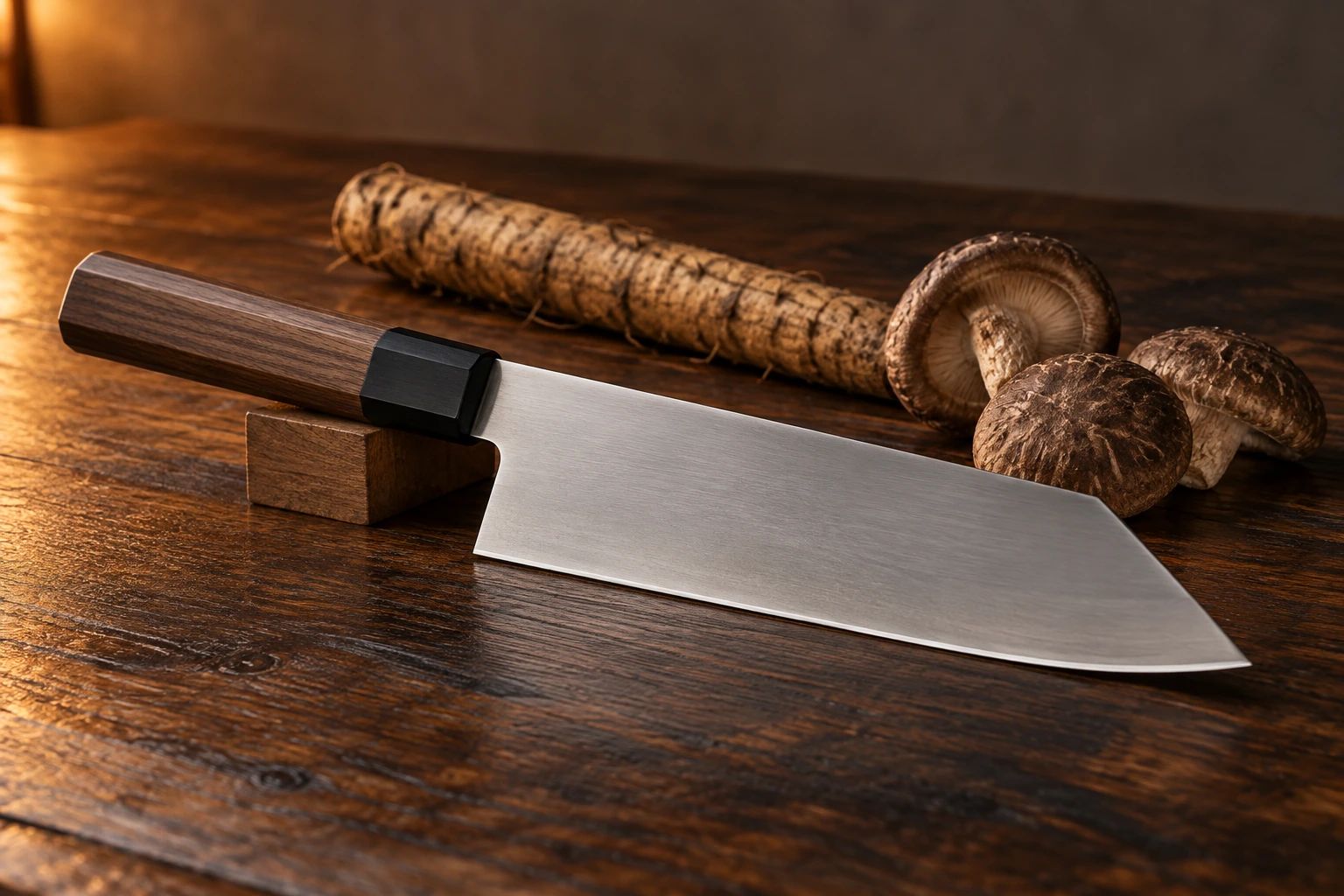
Table of Contents
TL;DR — best picks by budget
The best-value home bunka is the Tojiro DP Bunka 165-170mm (~$80-100). If you want a buy-once knife, the Sakai Takayuki Ginsan bunka (~$140-180) or a MAC all-rounder in bunka form (~$160-200) is where we point most cooks.
- Value (~$80-110) — Tojiro DP Bunka 165-170mm — the editor's first-bunka pick
- Lifetime (~$140-200) — Sakai Takayuki Ginsan Bunka ~165-180mm / MAC all-rounder
- Pro-leaning (~$250-400) — Masakage line bunka / hand-forged Sakai bunka
- Showpiece gift — Shun Classic / Premier-style bunka (~$180-260)
- First Japanese knife and you like the pointed tip → Tojiro DP Bunka
- "Last knife" all-rounder → Sakai Takayuki Ginsan or MAC
- Prefer a rounded, more forgiving nose → buy a santoku instead (see best santoku)
Short version: the ~$80-100 Tojiro DP Bunka covers most kitchens, and the next real step up is a ~$140-200 Sakai Takayuki Ginsan or MAC. Be honest with yourself first — if the k-tip does not excite you, a santoku does the same everyday job.
What a bunka is (and how it differs from a santoku)
Think of the bunka as the santoku's sharper-looking cousin. It is a double-bevel, all-purpose Japanese knife with the same broad, tall blade and the same flat-ish profile built for push-cutting — clean up-and-down strokes on a board rather than Western-style rocking. What changes is the tip: instead of the santoku's rounded "sheep's-foot" nose, the bunka has a reverse-tanto point — often called a k-tip — an angled, slightly aggressive point that drops down in line with the edge.
That tip is the whole reason to choose a bunka. It gives you a usable, accessible point for detail work: scoring skin, fine incisions, separating citrus segments, trimming fat, and any task where you want to pick up just the tip. On the rest of the blade, the bunka behaves exactly like a santoku — flat section for push-cutting vegetables, tall face for scooping prepped food off the board.
We want to be straight about this: bunka vs santoku is largely tip style and personal preference, not a meaningful performance gap. On everyday vegetable prep, dicing and boneless meat, a good bunka and a good santoku from the same maker cut essentially the same way. Choose the bunka if you like the point and the look; choose the santoku if you prefer a forgiving rounded nose. For the deeper anatomy, history and care details, see our dedicated bunka knife guide — this article is about which one to buy.
How we chose
We compared, for each bunka:
- Steel and hardness — the makers' published steel and HRC.
- Blade length and weight — as listed by the maker.
- Bevel, tip and handle — double-bevel geometry, reverse-tanto tip, Western (yo) or Japanese (wa) handle.
- Care needs — stainless versus carbon steel.
- Price — typical price ranges at the time of writing.
We have not cut with these knives. The only knives we have cut with are the six santoku in our Kappabashi test.
We do not invent hardness numbers or specs. Where a maker documents a steel we name it; where details vary by batch or model we stay conservative and say so. All prices are approximate street ranges, not quotes — they move a lot by finish, handle and seller.
Value tier — your first bunka
Editor pick: Tojiro DP Bunka 165-170mm (~$80-100)
The Tojiro DP line is our default recommendation for a first Japanese knife, and the bunka version inherits everything that makes it great: a VG-10 core with stainless cladding, made in Tsubame-Sanjo (Niigata) with tight quality control and a strong international reputation. It is a yo-style riveted handle for water resistance, light in the hand, and easy to sharpen. You are getting a pro-tier stainless steel at an entry price, now with a k-tip.
- Strengths — excellent sharpness for the money, easy to sharpen, low maintenance, widely available worldwide, keen reverse-tanto tip.
- Weaknesses — plain styling; the pointed tip is less forgiving than a santoku nose if you are casual near it.
- Buy if — first Japanese knife, value-focused, you like the look of the k-tip and want one capable all-rounder.
Same-tier alternative: Tojiro Shirogami / mid-range Tsubame-Sanjo bunka (~$70-110) — a carbon-core option for cooks who already enjoy maintenance and want a keener, easier-to-sharpen edge. A rewarding choice, but only if you will dry and oil it; beginners should stay stainless.
Lifetime tier — the buy-once bunka
Our pick: Sakai Takayuki Ginsan Bunka ~165-180mm (~$140-180)
If you want a bunka with a more traditional Japanese feel, this is our pick. Sakai-forged, with a Ginsanko (silver-3) stainless core and typically a ho-wood octagonal wa handle, it pairs near-carbon edge keenness with stainless ease of care. It is the natural step up from the Tojiro DP for someone who cooks Japanese food and wants a knife that will last a decade with normal stone sharpening.
- Strengths — refined Sakai forging, keen and easy-to-sharpen Ginsan edge, traditional wa handle, low maintenance for a high-performance steel.
- Weaknesses — distribution is thinner outside Japan; finish and exact size vary by batch.
- Buy if — you want a lifetime all-rounder, like the Japanese aesthetic, and sharpen on stones.
Alternative 1: MAC all-rounder (bunka-style) ~165-180mm (~$160-200) — MAC's proprietary high-carbon Mo-V steel is the default professional kitchen steel in North America, prized for edge retention and balance. Western styling rather than a Japanese look, and slightly heavier, but a genuine buy-once knife. Where MAC offers a santoku/all-rounder in this profile, it is an easy lifetime recommendation. See our santoku picks for the closely related MAC Professional.
Alternative 2: Shun Classic / Premier-style bunka (~$180-260) — VG-MAX core with Damascus cladding, the most visible Japanese-brand knife in North America. Stunning to look at, fair performance, and an excellent gift. Note the Damascus pattern is cosmetic — you are paying for the look, not extra sharpness — and Shun is usually significantly cheaper in Japan than in the US.
Pro-leaning tier — forged and hand-finished
This tier is more about ownership pleasure and artisan provenance than raw home-kitchen advantage. A well-set-up $150 bunka cuts vegetables wonderfully; here you are paying for hand-forging, finer steels and the maker's signature.
Our pick: Masakage line bunka (~$250-400)
Masakage is a family of Japanese lines made by respected smiths (the brand spans several named series in different steels and finishes). The bunka models pair a hard, keen core steel — stainless or carbon depending on the line — with hand-finished kurouchi or Damascus cladding and quality wa handles. Expect a thinner, more characterful blade than the value tier and a noticeably keener factory edge, with the trade-off that harder steels can be less forgiving of lateral force.
- Strengths — hand-forged blade character, keen factory edge, beautiful finishes, individual maker provenance.
- Weaknesses — price, thinner harder blades reward careful technique, availability varies by line and seller.
- Buy if — you already own a workhorse knife, value craft and finish, and sharpen confidently.
Alternative: hand-forged Sakai or Echizen bunka (~$250-450+) — single-workshop knives from Sakai and Fukui's Echizen forges, often carrying the smith's mark and lifetime sharpening support. Steels vary by workshop (Aogami/Shirogami carbon or premium stainless like SG2). Lead times can run weeks to months, and availability outside Japan is limited.
What length bunka should you buy?
A bunka is sized like a santoku, so the same board logic applies: the blade should fit within roughly two-thirds of your cutting-board width.
- 165-170mm — the home all-rounder default. Average hands, a standard 36×24cm board, most kitchens. This is the size to buy if unsure.
- 180mm — larger hands, a 45cm+ board, or lots of bigger produce. More reach and knuckle clearance, still very controllable.
- 150mm and below — really petty/utility territory; nimble for small jobs but no longer a true all-rounder.
Bunka tend to cluster a touch shorter and more compact than gyuto, which is part of their appeal in tighter kitchens. If you want a longer rocking blade instead, that is a gyuto — see our best gyuto knife guide.
Full comparison table
Prices are approximate street ranges in USD, not fixed quotes. Bunka swing widely by length, steel, finish, handle and seller, and currency plus import costs shift them further — treat these as ballpark bands for comparison, not exact figures.
| Model | Price (USD, approx.) | Length | Steel | Tier |
|---|---|---|---|---|
| Tojiro DP Bunka | ~$80-100 | 165-170mm | VG-10 core (stainless) | Value |
| Tojiro / Tsubame-Sanjo carbon bunka | ~$70-110 | 165-170mm | Shirogami carbon | Value |
| Sakai Takayuki Ginsan Bunka | ~$140-180 | 165-180mm | Ginsanko (stainless) | Lifetime |
| MAC all-rounder (bunka-style) | ~$160-200 | 165-180mm | Proprietary high-carbon Mo-V | Lifetime |
| Shun Classic / Premier-style bunka | ~$180-260 | 165-180mm | VG-MAX core, Damascus clad | Lifetime / gift |
| Masakage line bunka | ~$250-400 | 165-180mm | Varies by line (stainless/carbon) | Pro-leaning |
| Hand-forged Sakai / Echizen bunka | ~$250-450+ | 165-180mm | Aogami / Shirogami / SG2 | Pro-leaning |
How to choose without regret
- Decide bunka vs santoku first. They cut everyday prep the same. Choose the bunka for the pointed k-tip and the look; choose a santoku for a rounded, more forgiving nose. Do not overthink it — both are excellent all-rounders.
- First bunka → ~$80-180. Tojiro DP for value, Sakai Takayuki Ginsan or MAC for buy-once. Cheaper than that underperforms; pricier is over-investment for a first knife.
- Don't buy on Damascus alone. The pattern is cosmetic; the core steel is what cuts. Same VG-10 core, no Damascus = the same edge for less.
- Size by cutting board. Blade should fit within two-thirds of board width. Standard 36cm board → 165-180mm.
- Stainless first, carbon later. Beginners: VG-10, Ginsan or AUS-10. Carbon is a maintenance love affair, not a first knife.
- Mind the tip in storage. The reverse-tanto point is keen — use a saya, blade guard or a knife block slot so it does not chip in a drawer.
- Watch foreign-market pricing. "Made in Japan" bunka often run well above Japanese domestic prices abroad. If you visit Japan, Kappabashi is the cheapest place to compare in person.
Stuck? Buy the Tojiro DP Bunka 165-170mm. It is the same answer we give for the santoku, just with a sharper tip. For the wider category, see our best Japanese knives roundup.
Buying a bunka in Japan
Japan is dramatically cheaper for the exact same knives, and a bunka is a knife you really want to hold before buying — tip shape and blade height are personal. Tokyo's Kappabashi kitchenware street is the easiest single place to compare Tojiro, Sakai Takayuki, Shun and smaller makers side by side, try the k-tip in hand against a santoku, and often get on-the-spot sharpening or engraving.
If you cannot travel, international shipping from Japanese sellers on Rakuten or Amazon.jp still typically beats overseas retail for the same model. Watch for sale windows — January, the June summer-bonus season and November discount events — when Tojiro and others are often marked down. Whatever you pay, treat the ranges above as ballparks: the same bunka can vary 30-80% between Japanese domestic and overseas prices.