Best Honesuki 2026: 6 Editor-Tested Japanese Boning Knives by Budget
QUICK ANSWER
Best honesuki overall: Tojiro DP 150mm (~$70). Best value: Kai Seki Magoroku (~$45). Pro pick: Sakai Takayuki single-bevel (~$160).
Best overall
Tojiro DP 150mm
Best value
Kai Seki Magoroku
Pro / traditional
Sakai Takayuki single-bevel
Length range
145-180mm
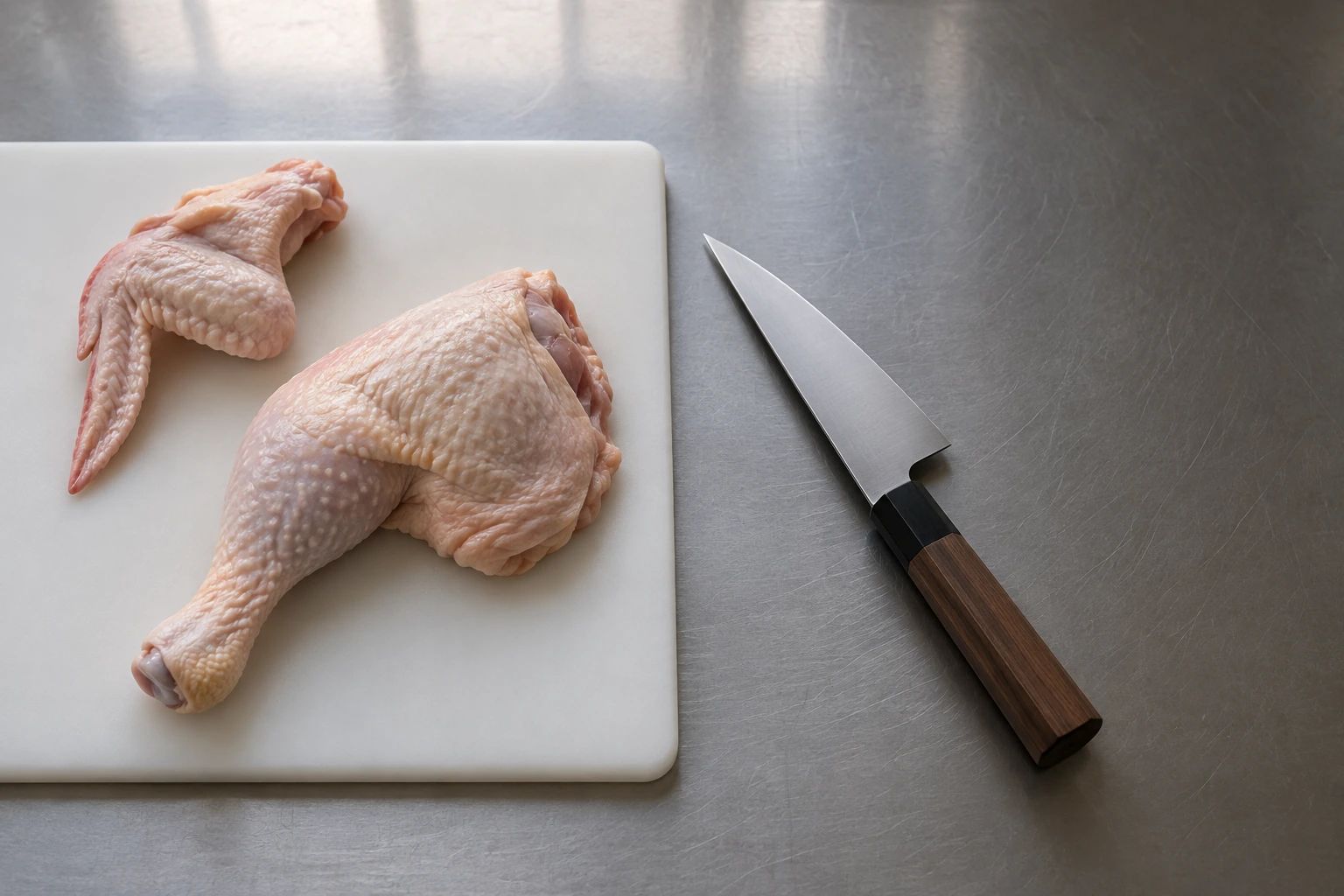
Table of Contents
TL;DR — best picks by budget
The single best-value honesuki for most home cooks is the Tojiro DP 150mm (~$70). Double-bevel, stainless, easy to sharpen, and widely available — it does the poultry work without asking you to learn single-bevel technique first.
- Under $60 — Kai Seki Magoroku honesuki (~$45) — the budget floor we actually like
- $60-130 — Tojiro DP Honesuki 150mm (~$70) — the editor's choice / Misono Molybdenum (~$120)
- $130+ — Sakai Takayuki single-bevel honesuki (~$160) / forged stainless honesuki ($180+)
- First honesuki → Tojiro DP 150mm (double-bevel)
- Best budget → Kai Seki Magoroku
- Traditional / pro → Sakai Takayuki single-bevel
Short version: buy the double-bevel Tojiro DP unless you have a specific reason to go single-bevel. Remember this is a poultry-and-boning specialist, not a general-purpose knife — if you only want one Japanese blade, see our best Japanese knives guide first.
What a honesuki excels at
The honesuki (骨スキ, "bone-peeling") is the Japanese poultry-boning knife. The blade is short (typically 145-180mm), stiff, and triangular — a flat or near-flat edge running to a sharp, pointed tip, with a tall heel for leverage. That rigidity is the whole point. Where a flexible western boning knife bends to follow a contour, the honesuki stays put so you can drive the tip precisely into a joint and feel exactly where the bone is.
What it does brilliantly:
- Breaking down whole chickens. The pointed tip slips into the joints; a small twist pops the wing and thigh apart at the socket without sawing through bone.
- Jointing and portioning poultry. Chicken, duck, quail — the stiff blade gives you the control to separate at the joint cleanly, the way a butcher does.
- Trimming meat off the bone. Removing breasts from the keel bone, scraping meat off a carcass, cleaning up silverskin and cartilage — the rigid edge and pointed tip ride the bone closely.
- Trimming and detail work. The heel gives leverage for cartilage; the tip handles fiddly trimming a larger knife can't reach.
What it is not for: chopping through bone (that chips the edge — it works around joints, not through them), slicing vegetables, or board prep. It is a dedicated tool. If you butcher whole birds regularly, it transforms the job; if you mostly buy pre-cut chicken, you may not need one at all.
Single-bevel honesuki vs western honesuki & hankotsu
Before you buy, understand the three things that all get called "honesuki" or sit right next to it. Getting this wrong is the most common honesuki regret.
Traditional single-bevel honesuki (maru). Ground on one side only, like many traditional Japanese knives. This gives an exceptionally precise, controlled cut that hugs the bone — professionals breaking down poultry all day love it. The trade-offs are real: it is handed (a right-handed grind won't suit a left-handed cook), it steers sideways in the cut until you adapt, and it is harder to sharpen because you maintain one bevel and deburr the flat back.
Double-bevel "western honesuki" (kaku). Ground on both sides like a Western knife. It is ambidextrous, more forgiving in the hand, and far easier to sharpen on a standard stone. For almost every home cook — and many professionals — this is the right honesuki. Tojiro, Kai, and Misono all make excellent double-bevel honesuki.
Hankotsu (半骨). A close cousin, not the same knife. The hankotsu is a stiff, narrow boning knife traditionally used for trimming and boning hanging meat — beef and pork on the rail — rather than poultry on a board. It is usually double-bevel and narrower than a honesuki. If your work is poultry, buy a honesuki; the hankotsu is a meat-trade specialist.
Our recommendation: double-bevel honesuki for almost everyone. Choose single-bevel only if you already use single-bevel knives and want the last bit of bone-hugging precision. For the full breakdown of bevels and technique, see our complete honesuki guide.
How we tested
Our testing protocol, focused on the work this knife actually does:
- Sample set — honesuki spanning roughly $40 to $300, double-bevel and single-bevel, from major Japanese brands.
- Whole-bird breakdown — repeated breakdowns of whole chickens: jointing wings and thighs, removing breasts off the keel, separating drumstick from thigh.
- Joint-pop test — how cleanly the tip found and separated each joint without sawing or splintering bone.
- Trim test — removing silverskin, cartilage, and clean-up scraping along the carcass.
- Edge retention — several birds per knife with no honing, then a paper-edge check.
- Sharpening test — a session on a #1000 stone, noting how quickly the apex returned (and, for single-bevel, how cleanly the back deburred).
- Grip test — fatigue and control through a full session of jointing.
Each knife scored on tip control, joint-pop cleanliness, edge retention, sharpening ease, grip, and value. We did not score it as a general-purpose knife, because it isn't one.
Best value — under $60
Editor pick: Kai Seki Magoroku honesuki (~$45)
Kai's Seki Magoroku line, made in Seki (Gifu), is the sensible budget entry into honesuki. A double-bevel stainless blade around 150mm, it handles whole-chicken breakdown comfortably — the tip is pointed enough to find joints and the blade is stiff enough to work them. The steel is softer than a VG-10 core, so the edge won't hold quite as long, but it sharpens back quickly, which is exactly what you want while you're learning.
- Strengths — genuinely affordable, double-bevel (ambidextrous), easy to sharpen, made in Seki
- Weaknesses — softer steel means more frequent touch-ups, plainer fit and finish
- Buy if — first honesuki, occasional poultry butchery, testing whether you'll use one
Honest take: if you butcher birds a few times a month, this is plenty of knife. If you find yourself reaching for it weekly, step up to the Tojiro DP below.
Mid tier — $60-130
Editor #1: Tojiro DP Honesuki 150mm (~$70)
The benchmark home honesuki and our overall pick. A VG-10 core with stainless cladding, made in Tsubame-Sanjo (Niigata), with the same tight quality control that made the Tojiro DP santoku a default recommendation. Double-bevel, so it's ambidextrous and easy to sharpen. The blade is stiff with a precise, pointed tip; it pops chicken joints cleanly and holds its edge through several birds. A riveted yo-style handle shrugs off moisture.
- Strengths — VG-10 edge retention at a fair price, double-bevel, excellent tip control, available worldwide
- Weaknesses — plain styling, not the bone-hugging precision of a single-bevel
- Buy if — you want one honesuki to keep, value performance per dollar, sharpen your own knives
When someone asks "what honesuki should I buy," this is our answer four times out of five. VG-10 in a honesuki at this price is a genuine value.
Step-up alternative: Misono Molybdenum honesuki (~$120) — Misono's molybdenum-steel boning knife, forged in the Misono workshop tradition, is a beautifully balanced double-bevel option with a refined edge feel and a slim profile. Pros who want a Western-handled honesuki with that Misono glide often land here. Slightly softer than the VG-10 Tojiro but lovely to use and easy to maintain.
Pro / traditional — $130+
This tier is for cooks who break down poultry often, want traditional single-bevel precision, or want a forged blade with provenance.
Editor #1: Sakai Takayuki single-bevel honesuki (~$160)
Forged in Sakai, the historic knife city, Sakai Takayuki's single-bevel (maru) honesuki is the traditional poultry-butchery tool done properly. The single bevel gives an exceptionally controlled cut that rides the bone — once you adapt to the steering, the precision is a step beyond any double-bevel. It is offered in right- and left-handed grinds (you must choose), with a ho-wood wa handle. This is a knife to grow into, not a beginner's first honesuki.
- Strengths — true single-bevel bone-hugging precision, Sakai forging, traditional handle
- Weaknesses — handed (must match your dominant hand), steeper learning curve, single-bevel sharpening is harder
- Buy if — you already use single-bevel knives, butcher poultry frequently, want the traditional tool
Alternative: forged stainless double-bevel honesuki ($180+) — several Sakai and Echizen workshops make forged double-bevel honesuki in premium stainless (VG-10, Ginsanko, or SG2 cores) with upgraded handles. You get most of the precision with ambidextrous, lower-maintenance convenience. A good "buy once" option if you want a forged blade but don't want to commit to single-bevel technique.
Full comparison table
Prices below are approximate ranges and vary widely by retailer, exchange rate, handle upgrade, and whether you buy in Japan or abroad. Treat them as ballpark, not quotes — Japanese domestic prices (e.g. at Kappabashi) are often well below overseas listings.
| Model | Price (approx.) | Bevel | Length | Steel (typical) | Editor rating |
|---|---|---|---|---|---|
| Kai Seki Magoroku | ~$45 | Double | ~150mm | Stainless | ★★★★☆ |
| Tojiro DP Honesuki | ~$70 | Double | 150mm | VG-10 core | ★★★★★ |
| Misono Molybdenum | ~$120 | Double | ~145mm | Molybdenum | ★★★★☆ |
| Sakai Takayuki (maru) | ~$160 | Single | ~150mm | Stainless / carbon | ★★★★★ |
| Forged stainless honesuki | $180+ | Double | 150-180mm | VG-10 / Ginsan / SG2 | ★★★★☆ |
Prices vary by retailer, availability, tax and exchange rate — these are approximate ranges, not live pricing. Specs such as exact length, hardness, and steel also vary by production run and handle option; always confirm with the retailer before buying.
A note for left-handed cooks
This matters more for a honesuki than for most knives. Double-bevel honesuki are ambidextrous — the Kai, Tojiro DP, Misono, and forged double-bevel options above work equally well in either hand, so left-handed cooks can buy them with no special order.
Single-bevel (maru) honesuki are handed. A standard single-bevel grind is set up for a right-handed cook; a left-handed cook needs a left-handed grind, which is usually a special order, sometimes at a premium and with a longer wait. If you're left-handed and set on a traditional single-bevel honesuki, confirm the grind explicitly before you buy — a right-handed single-bevel will fight you in the cut. When in doubt, the double-bevel Tojiro DP sidesteps the issue entirely.
Carbon vs stainless
For a honesuki, we lean stainless for most cooks — and the reason is specific to this knife. You use a honesuki on raw poultry, which means blood, moisture, and a blade that often sits between birds. A carbon honesuki (Shirogami or Aogami core) will spot and rust fast in that environment unless you wipe and dry it constantly through the job. Stainless cores (VG-10 on the Tojiro DP, Ginsanko or molybdenum elsewhere) just need a wipe and a wash.
Carbon honesuki do exist and have devotees who love the keen edge and easy sharpening — but only buy carbon if you'll commit to wiping it dry the moment you set it down and oiling it after use. For a knife that lives around raw meat juices, stainless is the lower-stress choice. For the full steel breakdown, see our steel types guide.
How to choose without regret
- Default to double-bevel. Unless you already use single-bevel knives, the double-bevel honesuki is more forgiving, ambidextrous, and easier to sharpen. The Tojiro DP is the safe answer.
- Match the bevel to your hand. Single-bevel is handed — left-handed cooks need a left grind. Double-bevel avoids the issue.
- Don't ask it to be a chef's knife. A honesuki is a poultry-and-boning specialist. For all-round prep, buy a gyuto or santoku instead.
- Never chop bone with it. The honesuki works around joints, not through bone. Chopping chips the edge — that's what a heavier tool is for.
- Lean stainless near raw meat. Carbon rusts fast in poultry work unless you babysit it. Stainless is the low-stress pick here.
- Watch foreign-market pricing. "Made in Japan" honesuki often run well above Japanese domestic price abroad. On a Japan trip, Kappabashi is the cheapest place to compare in person.
Stuck? Buy the Tojiro DP 150mm double-bevel — it's the best answer for most cooks. To understand the blade itself in depth, read our complete honesuki guide; if you're still deciding whether a honesuki even belongs in your kitchen, our best Japanese knives roundup puts it in context against the all-rounders.