Best Yanagiba Knife 2026: Sashimi Slicers Ranked by Budget
Basis Spec comparison · not hands-on tested
How we chose: makers' published specs, materials and price. We have not used these products ourselves. How we test
QUICK ANSWER
For most home cooks the Tojiro Shirogami Yanagiba 270mm (~$70-110) is the best first sashimi knife; step up to a Sakai Takayuki Kasumitogi 270-300mm (~$150-260) for a lifetime blade, or a hand-forged Yoshihiro/Masamoto for a pro-traditional knife.
A yanagiba is a long, single-bevel slicing knife built to cut sashimi and sushi neta in one clean pulling stroke. It is a specialist for raw fish and slicing — not a general kitchen knife, and not for bones.
- Best first yanagiba
- Tojiro Shirogami 270mm
- Best lifetime
- Sakai Takayuki Kasumitogi
- Bevel
- Single-bevel (mostly right-handed)
- Typical length
- 270-300mm
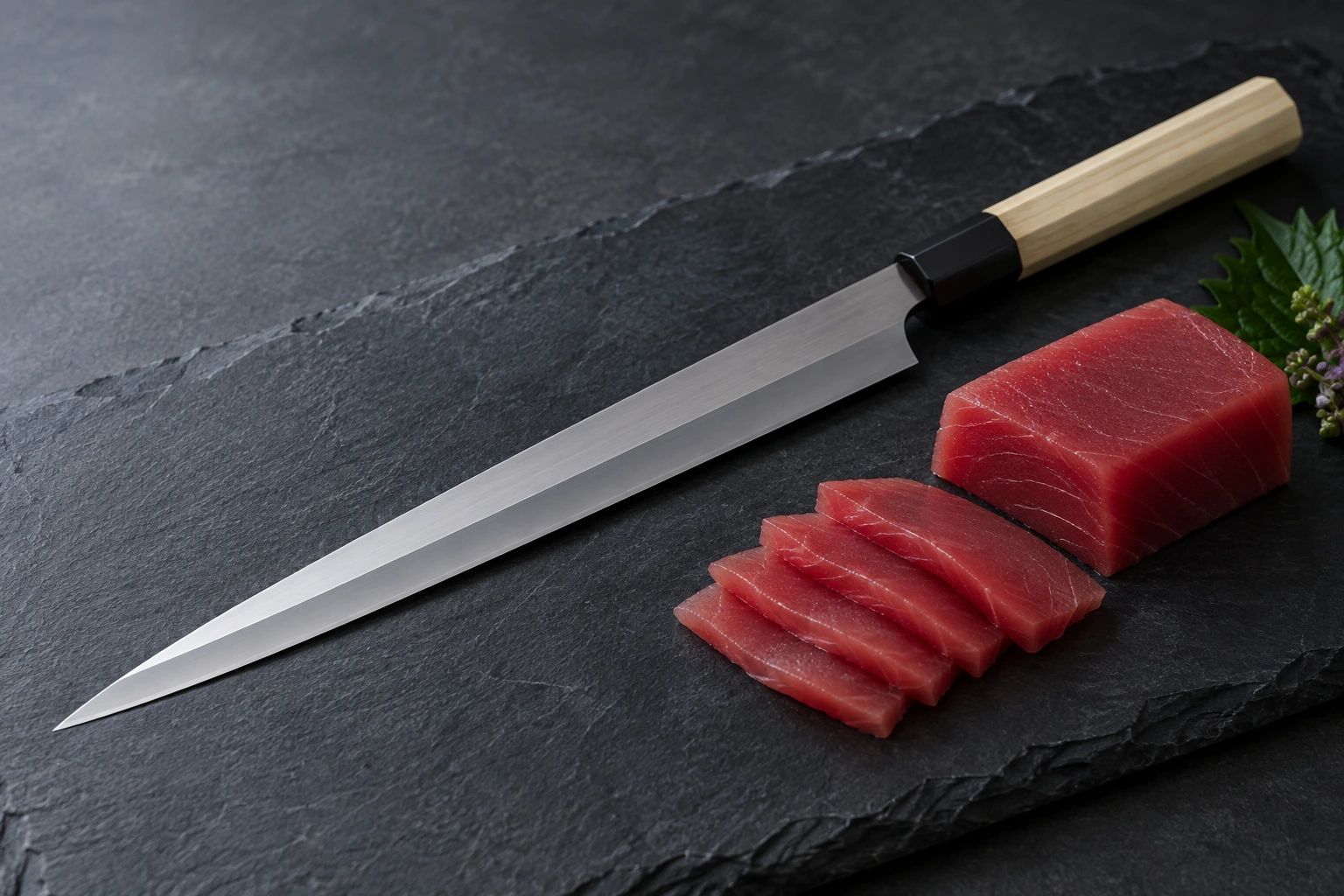
Table of Contents
TL;DR — best picks by use-case
The single best-value first yanagiba is the Tojiro Shirogami (White #2) 270mm (~$70-110). If you want a "buy once" sashimi knife and cook Japanese fish seriously, step up to a Sakai Takayuki Kasumitogi 270-300mm (~$150-260).
- Value / first yanagiba — Tojiro Shirogami Yanagiba 270mm (~$70-110) — the editor's choice on-ramp
- Value, low-maintenance — stainless (Ginsan / VG-10) yanagiba 270mm (~$90-150) — less rust fuss for occasional slicing
- Mid / lifetime — Sakai Takayuki Kasumitogi Yanagiba 270-300mm (~$150-260) — forged in Sakai, refined kasumi finish
- Pro-traditional — Yoshihiro or Masamoto hon-kasumi / honyaki 270-300mm (~$300-700+) — top-restaurant pedigree
- Connoisseur carbon — Sukenari hand-forged 270-300mm (~$350-800+) — for collectors and serious carbon devotees
- Left-handed — order a left-handed (hidari) build from a Sakai or Tsubame-Sanjo maker, expect +15-30% and a wait
Short version: the ~$70-110 Tojiro Shirogami yanagiba or the ~$150-260 Sakai Takayuki Kasumitogi — most home cooks who slice sashimi are well served by one of these two.
Before you buy: what a yanagiba is (and is not)
A yanagiba (柳刃包丁, "willow blade") is a long, narrow, single-bevel slicing knife built for one job: cutting raw fish for sashimi and sushi neta in a single continuous pulling stroke. The length lets you draw the whole slice in one pull, and the single-bevel geometry produces a mirror-smooth face that lets the slice fall cleanly away without crushing the flesh. For the full background — the history of the willow blade, single-bevel anatomy, the pulling technique, sizing, and sharpening the ura — read our dedicated yanagiba knife guide. This page is the "which yanagiba should I buy" companion to that.
The hard rules that shaped every pick below:
- Slicing only — and mostly raw fish. A yanagiba is for clean pull-stroke slicing of boneless fillets and sushi blocks. It is not a general kitchen knife and is wrong for vegetables.
- Never on bone. The thin, acute single-bevel edge chips instantly on bone. Break fish down with a deba first, then slice with the yanagiba.
- Single-bevel means handed. Standard yanagibas are right-handed; left-handed cooks should buy a left-handed (hidari) build — see the next section.
- Carbon needs care. A White-steel yanagiba must be wiped dry promptly. If that sounds like a chore, choose stainless.
In short, the yanagiba is the finishing knife: it slices the fish a deba has already broken down. Many home cooks own a deba first and add a yanagiba when they start cutting a lot of sashimi.
Handedness: the honest left-handed warning
This is the single most important thing to get right before you spend money, so we are putting it up front. A yanagiba is single-bevel, which makes it inherently handed. The bevel is ground on one face and the back is nearly flat; the flat back sits against the fish so the slice releases cleanly. A standard yanagiba is built for the right hand. Used in a left hand, the geometry steers the blade into the cut, the slices come out wedged and uneven, and you end up fighting the knife on every stroke.
If you are left-handed, the honest answer is to buy a left-handed (hidari, 左利き用) yanagiba, not to "make do" with a right-handed one. The catch: left-handed single-bevel knives are usually a special order. Most Sakai and Tsubame-Sanjo makers offer them, but they typically carry a price premium (often +15-30%) and a longer lead time because they are ground individually rather than pulled from stock. Specify "left-handed" clearly when ordering, and budget extra time before a trip or event.
If you only slice occasionally and do not want the cost or wait, a double-bevel sujihiki is the genuinely ambidextrous alternative — it slices raw fish well, works for either hand, and sharpens like a normal knife. You lose a little of the single-bevel magic, but you gain flexibility. We will be blunt: do not let a shop talk you into a right-handed yanagiba "because you'll adapt." You mostly won't.
How we chose
- Specs — the makers' published steel, blade length, weight, bevel and ura grind, handle, and whether a left-handed build is offered.
- Care needs — carbon vs stainless, and how each steel copes with wet fish.
- Price — approximate street ranges from the value tier to pro-traditional.
We do not invent hardness numbers or specs. Where a maker documents a steel we name it; where details vary by batch we keep it conservative and say so. All prices are approximate street ranges, not quotes — single-bevel knives swing a lot by finish and seller. We have not cut with these knives; the only knives we have cut with are the six santoku in our Kappabashi under-$150 test.
Carbon vs stainless: which yanagiba steel?
The steel choice matters more on a yanagiba than on almost any other knife, because a slicer's whole reason to exist is the cleanliness of the cut face. Here is the honest trade-off.
- Carbon (Shirogami / White, Aogami / Blue) — the traditional sushi-chef choice. It takes the keenest edge, sharpens easily, and gives the purest slicing feel. The cost is maintenance: White steel will discolour and can spot-rust if you do not wipe it dry between fish and after use. Pros accept this because they are wiping constantly through service.
- Stainless (Ginsan / Silver #3, VG-10) — the practical home choice. Ginsan in particular sharpens and behaves remarkably like carbon while resisting rust, so it forgives a few damp minutes. You give up a sliver of ultimate keenness, but for occasional slicing that is the right trade.
Our default advice: if you slice sashimi often and enjoy upkeep, go carbon; if you slice occasionally or hate babysitting a blade, go stainless (especially Ginsan). A beginner can be perfectly happy on either. Full background in our steel types guide.
Value tier — your first sashimi slicer
Editor pick: Tojiro Shirogami (White #2) Yanagiba 270mm (~$70-110)
The most sensible on-ramp to a real single-bevel sashimi knife. White #2 carbon core, made in Tsubame-Sanjo (Niigata) with Tojiro's consistent quality control and broad international availability. It takes a keen edge, sharpens easily on a whetstone, and gives you authentic yanagiba geometry and length without a craft-knife price — the ideal knife on which to learn the pulling stroke and single-bevel sharpening.
- Strengths — genuine carbon keenness, easy to sharpen, widely available, honest value, proper 270mm length
- Weaknesses — carbon steel: must be wiped dry or it spot-rusts; plain styling; right-handed by default
- Buy if — first yanagiba, you slice fish regularly and do not mind quick after-use care
Low-maintenance alternative: stainless (Ginsan or VG-10) yanagiba 270mm (~$90-150) — a stainless single-bevel slicer from a maker such as Tojiro or Sakai Takayuki. You give up a little ultimate keenness versus White steel, but it forgives a few minutes left damp — the right call if you cut sashimi only occasionally or want one less thing to fuss over.
Mid tier — the lifetime home yanagiba
Editor pick: Sakai Takayuki Kasumitogi Yanagiba 270-300mm (~$150-260)
Forged in Sakai, Osaka — the historic heart of single-bevel knife making — with a traditional kasumi (mist) finish over a White-steel carbon core. This is where craftsmanship becomes visible: a refined hollow-ground ura, a clean bevel that slices cleaner for longer, and a comfortable ho-wood wa handle. If you cook Japanese fish dishes seriously and want one yanagiba for life, this is our pick. Available in 270mm and 300mm, and left-handed to order.
- Strengths — refined Sakai grind, excellent slice release, lovely kasumi finish, sharpens beautifully, lifetime knife
- Weaknesses — carbon care required; left-handed build is a priced special order; more knife than a casual slicer needs
- Buy if — you slice sashimi regularly, want a "buy once" blade, and enjoy maintaining carbon steel
Lower-maintenance alternative in this tier: a Ginsan (Silver #3) yanagiba from Sakai Takayuki or a comparable maker (~$140-240) — stainless behaviour with a near-carbon edge, so you get most of the mid-tier slicing quality with far less rust anxiety. A strong pick if you love the upgrade but not the upkeep.
Pro-traditional tier — hand-forged honyaki and kasumi
This tier is craft and provenance more than raw home-use performance. The differences in everyday slicing narrow, but hand-forging, a master smith's grind, premium White #1 steel, and (at the top) water-quenched honyaki construction carry the price. These are the knives sushi chefs aspire to and collectors seek out.
Editor pick: Yoshihiro or Masamoto hon-kasumi / honyaki Yanagiba 270-300mm (~$300-700+)
Both are long-respected names with genuine restaurant pedigree. Yoshihiro is widely available internationally and offers a broad ladder of single-bevel yanagibas from quality kasumi up to honyaki. Masamoto is a classic Tokyo name long associated with professional sushi kitchens. At this level you are buying a hand-forged blade with a master's grind, superb slice release, and a knife that will reward decades of proper sharpening.
- Strengths — hand-forged blade character, master-ground single bevel, top-tier slice quality, restaurant pedigree, ownership pride
- Weaknesses — price; honyaki is demanding to sharpen and best for experienced users; carbon maintenance; lead times on premium builds
- Buy if — you already slice well, value traditional craft, or want a gift-grade sashimi knife
Connoisseur alternative: Sukenari hand-forged Yanagiba 270-300mm (~$350-800+) — Sukenari is prized among enthusiasts for hand-forged blades and beautiful finishes across carbon and high-end stainless. A collector-leaning choice for serious carbon devotees who want something a step off the beaten path. As with all honyaki-class knives, sharpening is advanced work.
What length yanagiba should you buy?
Length is the spec people get wrong most often, because a yanagiba is meant to slice in one pull — the blade should comfortably exceed the width of whatever you are cutting so you never saw.
- 240mm (9.4") — the friendliest home size. Easier to control and store, smaller hands welcome. A fine place to learn.
- 270mm (10.6") — the standard all-rounder and our default recommendation. Handles typical salmon and tuna blocks in a single clean draw.
- 300mm (11.8") and up — for larger fish, longer slices, and serious sushi work. More reach, but needs board space and a confident stroke.
If you are unsure, buy 270mm. It is the size most home cooks settle on, and it is long enough for nearly all home sashimi without becoming unwieldy. Our yanagiba knife guide covers sizing by fish and skill level in more depth.
Full comparison table
Prices are approximate street ranges in USD, not fixed quotes. Single-bevel yanagibas vary widely by length, finish, handle, and seller, and currency and import costs shift them further — treat these as ballpark bands for comparison, not exact figures.
| Pick | Tier | Price (USD, approx.) | Typical length | Steel |
|---|---|---|---|---|
| Tojiro Shirogami Yanagiba | Value / first | ~$70-110 | 270mm | White #2 carbon |
| Stainless (Ginsan / VG-10) Yanagiba | Value, low-maintenance | ~$90-150 | 270mm | Ginsan / VG-10 stainless |
| Sakai Takayuki Kasumitogi Yanagiba | Mid / lifetime | ~$150-260 | 270-300mm | White-steel carbon (kasumi) |
| Yoshihiro / Masamoto kasumi-honyaki | Pro-traditional | ~$300-700+ | 270-300mm | White #1/#2 carbon |
| Sukenari hand-forged Yanagiba | Connoisseur | ~$350-800+ | 270-300mm | Carbon / high-end stainless |
| Left-handed (hidari) build | Any tier, special order | +15-30% over base | 240-300mm | Maker's choice |
How to choose without regret
- First yanagiba → value tier. Tojiro Shirogami 270mm, or a stainless 270mm if you want less upkeep. Learn the pulling stroke and single-bevel sharpening here before spending more.
- Left-handed? Buy left-handed. Do not force a right-handed single bevel. Order a hidari build (+15-30%, longer wait) or use a double-bevel sujihiki instead.
- Match steel to your habits. Carbon for the keenest edge if you will wipe it dry; stainless (especially Ginsan) if you slice occasionally or hate maintenance.
- Default to 270mm. Long enough for home sashimi, not unwieldy. Drop to 240mm for tight kitchens and smaller hands; go 300mm+ only for big fish.
- Never put it on bone. Break the fish down with a deba, then slice with the yanagiba. One bone strike can chip the edge.
- Pro-traditional is a second or third knife. Hand-forged honyaki is glorious but demanding to sharpen — earn it after you can slice and maintain a simpler blade.
Stuck? For most home cooks the answer is the Tojiro Shirogami Yanagiba 270mm to start, stepping up to a Sakai Takayuki Kasumitogi when sashimi becomes a regular habit. For technique and anatomy, see our yanagiba knife guide and single vs double bevel.
Buying a yanagiba in Japan
Japan is usually cheaper for the same maker, and — more importantly for a handed, length-sensitive knife — you can hold options in hand and confirm a left-handed build before you commit. Tokyo's Kappabashi kitchenware street and the forges of Sakai carry the widest selection of single-bevel slicers, from value Tojiro up to honyaki. Domestic prices often sit below overseas retail, and good shops will discuss steel, length, and handedness honestly.
If you cannot travel, reputable makers and shops ship internationally. For broader category context, see our best Japanese knives roundup, and to pair your slicer with a butchery knife, our best deba knife picks.