Where to Buy Japanese Knives in Tsubame-Sanjo: Tojiro & Open Factories (2026)
QUICK ANSWER
Tsubame-Sanjo in Niigata Prefecture is Japan's metalworking and cutlery cluster, and its signature way to buy is at the source — Tojiro, Tadafusa and Suwada all run open factories or workshop visits where you can watch knives being made and buy direct, with the Tsubame-Sanjo Regional Industry Center as the one-stop showroom near the station.
- Where
- Tsubame & Sanjo, Niigata
- The draw
- Open factories, buy direct
- Tax-free from
- ~¥5,000 (passport)
- Flying home
- Checked bag only
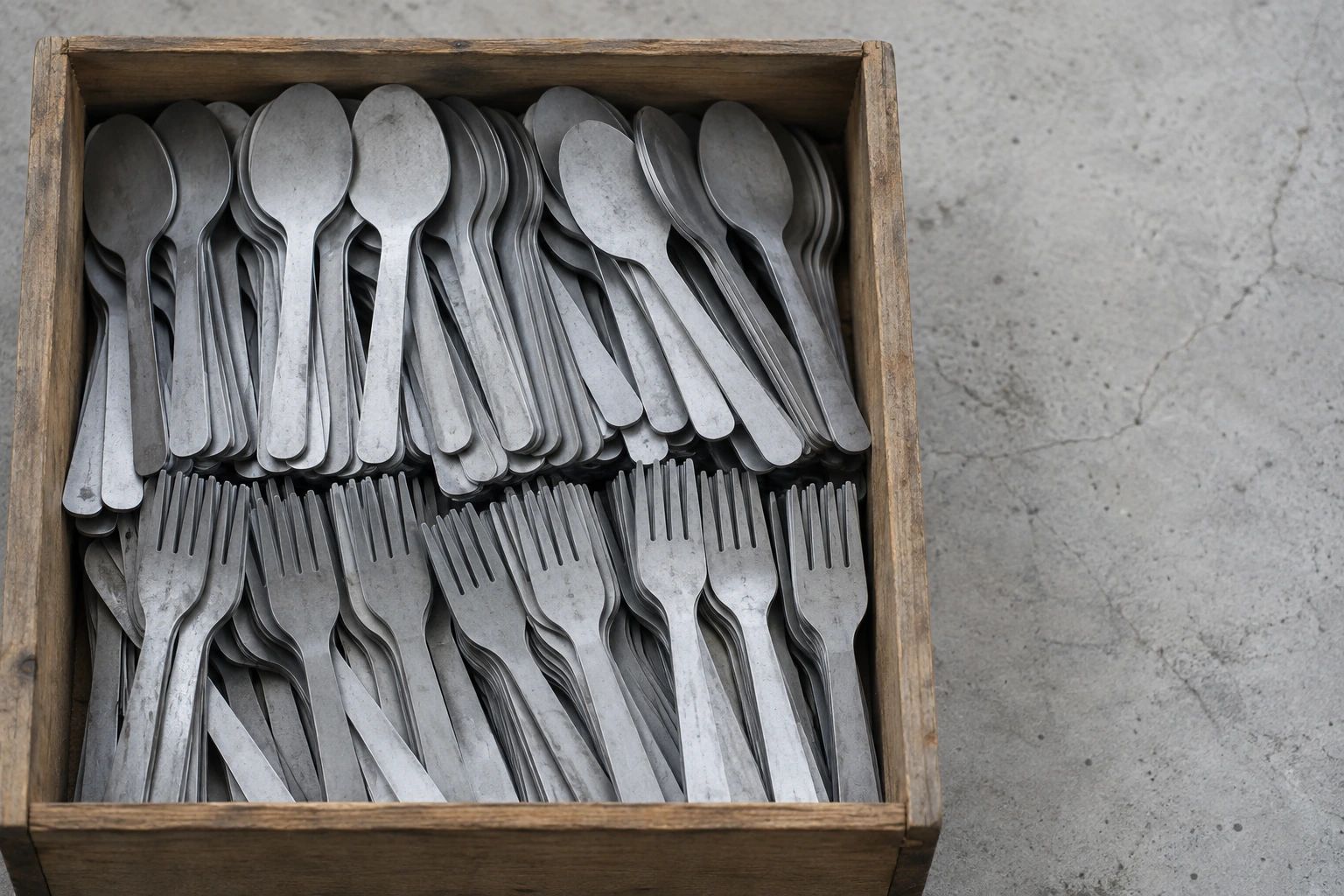
Table of Contents
TL;DR — the short version
Go for the factories, not just the shops. Watch a knife being made, buy it direct, bring your passport, and check it into your suitcase — not your carry-on.
- Where you are — Tsubame and Sanjo, neighbouring cities in Niigata Prefecture, together one of Japan's major metalworking and cutlery clusters with a tradition running back over 400 years.
- The signature experience — open factories and workshop visits. Tojiro runs a Knife Gallery and Open Factory, Tadafusa welcomes visitors to its Sanjo workshop, and Suwada operates an open factory with a shop attached.
- The one-stop — the Tsubame-Sanjo Regional Industry Center, near Tsubame-Sanjo Station, gathers products from hundreds of local manufacturers in one free-admission showroom.
- The steel — Tsubame-Sanjo makers are notable stainless specialists, VG-10 especially: low-maintenance, hard-wearing, well suited to home kitchens.
- Tax-free — passport + ~¥5,000 minimum spend at a registered shop removes Japan's ~10% consumption tax. Ask first; not every workshop is registered.
- Flying home — knives go in checked luggage only. Carry-on only? Have it shipped.
New to Japanese blades entirely? Skim our best Japanese knives overview first so you arrive knowing roughly what you want.
Tsubame-Sanjo knife-buying at a glance
| Detail | What to know |
|---|---|
| Where | Tsubame & Sanjo, neighbouring cities in Niigata Prefecture |
| Known for | Metalworking & cutlery cluster; 400+ years of tradition |
| Well-known makers | Tojiro, Tadafusa, Suwada |
| Signature experience | Open factories & workshop visits — watch, then buy direct |
| One-stop showroom | Tsubame-Sanjo Regional Industry Center (free admission) |
| Steel focus | Stainless specialists, VG-10 in particular |
| Typical spend | ~¥3,000-10,000 home; ~¥10,000-30,000 professional-grade |
| Getting there | Joetsu Shinkansen from Tokyo to Tsubame-Sanjo, approx. 2 hours |
| Tax-free | Passport + ~¥5,000 min spend removes Japan's ~10% tax |
| Flying home | Checked luggage only — never carry-on |
Everything in this table is unpacked below — starting with what actually makes this corner of Niigata worth the shinkansen ride.
Why Tsubame-Sanjo is a great place to buy a Japanese knife
Japan has several regions where buying a kitchen knife is an experience rather than a transaction, and Tsubame-Sanjo earns its place for a reason none of the others can quite match: you can watch your knife's world being built before you buy into it.
- A genuine industrial cluster. Tsubame and Sanjo are not a single famous shop but a whole working region — metalworking and cutlery makers concentrated across two neighbouring cities, with a tradition running back over 400 years. It began with farm tools and hand-forged nails (和釘) and grew through Western-style cutlery into today's kitchen knives and precision tools.
- Open doors. The region's defining trait is its open-factory culture. Makers here are unusually willing to let visitors see manufacturing, and several have built galleries, workshops and shops specifically to receive them.
- Names you already know. Tojiro — whose DP series is one of the most widely recommended entry points into Japanese knives — is made here, as are Tadafusa's handcrafted blades and Suwada's precision tools. Buying in Tsubame-Sanjo means buying where the brand actually lives.
- Value and practicality. The region's blend of craft and precision manufacturing tends to deliver very consistent knives at accessible prices, and its makers lean toward stainless steels that are easier to live with than traditional carbon — a real advantage for a knife that has to survive a long flight and a normal kitchen.
In short: come to Tsubame-Sanjo if you want to understand your knife, not just own it. For the brand-and-price fundamentals before you go, our best Japanese knives overview is the place to start.
Open-factory culture — buying at the source
"Open factory" is the phrase to know here. Rather than treating manufacturing as something hidden behind a fence, Tsubame-Sanjo makers have made a habit of opening it up — galleries attached to production lines, workshops that welcome visitors, and factory shops that sell direct to whoever walks in.
Why that matters when you are choosing a knife:
- You see the difference between processes. Grinding, sharpening, handle fitting, final finishing — watching them makes the price differences between models suddenly legible rather than arbitrary.
- You buy from people who made it. Questions get answered by staff at the source rather than by a retailer's product description, which is the fastest way to work out whether a blade actually suits your cooking.
- Direct pricing. Buying at the factory typically compares well against retail, which is part of why the region has a reputation for value.
- An annual festival. Once a year, in October, the region holds a Factory Festival (工場の祭典) during which dozens of additional factories open to the public. If your travel dates are flexible, it is the most concentrated way to see the region at work.
A necessary caveat: factory access is not a walk-in guarantee. Visiting arrangements, opening days and reservation requirements are set by each maker and do change, and the festival's dates are announced year by year. We deliberately do not publish opening hours, phone numbers or event dates here — confirm current details directly with each maker or the regional tourism information before you build a day around them.
The makers: Tojiro, Tadafusa & Suwada
Tsubame-Sanjo has many makers, but three are the ones most international visitors come for — and usefully, they offer three quite different experiences.
Tojiro (藤次郎), Tsubame — the complete visit. Tojiro is among the most widely respected Japanese knife manufacturers internationally, and its Knife Gallery and Open Factory in Tsubame is the region's flagship visitor experience: a large gallery displaying the maker's lineup, with an adjacent open factory where you can observe how the knives are made, plus direct sales on site. Tojiro is particularly associated with VG-10 stainless steel, and its DP series is one of the most commonly recommended first Japanese knives anywhere. If you are buying one knife on this trip and want the fullest "see it, understand it, buy it" arc, this is the stop — our Tojiro brand guide covers the range in detail.
Tadafusa (庖丁工房タダフサ), Sanjo — the handcraft workshop. Tadafusa is a smaller, craft-focused operation making beautifully finished kitchen knives, well known for its distinctive natural wood handles and for a bread knife that became genuinely famous in Japan and is often unavailable online. The workshop welcomes visitors, at a smaller and more personal scale than a production line. Availability of any specific model varies — the popular ones sell out — so go with an open mind rather than a fixed shopping list.
Suwada (諏訪田製作所), Sanjo — the open factory as architecture. Suwada built its global reputation on precision nail nippers, and its metalworking expertise extends into kitchen knives and other blades. The draw for visitors is its open factory, designed so that the manufacturing floor is genuinely on display, with a factory shop carrying the lineup.
Beyond these three, the region includes makers working in Damascus-patterned steel and specialists who keep every process in their own factory. We keep the fuller shop-by-shop directory in one maintained place: our Tsubame-Sanjo knife shop map.
The one-stop stops: showroom & museum
If your time is short — or you would rather compare many makers before committing — Tsubame-Sanjo has two places that do a lot of work in a single visit.
- Tsubame-Sanjo Regional Industry Center (燕三条地場産業振興センター). This is the region's central showcase, gathering products from hundreds of local manufacturers — knives, cookware, tools and cutlery — in one showroom, with free admission and a retail shop. It sits near Tsubame-Sanjo Station, which makes it the natural first or last stop of a visit. For a buyer, its real value is comparison: dozens of makers side by side, in the hand, in one room.
- Tsubame Industrial Museum (燕市産業史料館). A museum tracing the arc of Tsubame's metalworking history — from Edo-period nails through Western cutlery to today's knives and flatware — with an attached retail shop selling local metalwork, including the region's well-known spoons. Go here first if you want the context before the shopping; the knives make more sense once you know where the skill came from.
Both are also the easiest places to shop if you do not have a car and are working around train times. As always, hours and sections vary and can change, so check current details on the day rather than relying on any single guide — including this one.
Make one yourself
Suwada and Tojiro run their own factory tours. One workshop in the area can also be booked ahead in English.
Tsubame-Sanjo, Niigata · 225 min
Copper rather than steel — hammer-raised vessels, the trade the region was built on.
from ¥17,363 per person
Details & bookingMost of these are booked by request: you propose a date, the workshop confirms it afterwards. Only a handful confirm on the spot — the operator filters those here. Prices as listed by the operator on 14 September 2026. The operator sets them and may change them at any time. Affiliate links: if you book, we may receive a commission at no extra cost to you. These are the operator's listings, not editorial picks. We are an independent publisher, not connected to the operator.
What to look for in-store
The advantage of buying in person is that you can judge a knife with your hands, not a product photo. Here is what to actually check.
- Hold it first. Grip and balance are personal. Pick the knife up, mimic a few cuts in the air, and notice whether it feels light and nimble or planted and heavy. A knife that feels right in your hand is the right knife — there is no objectively correct weight.
- Understand the stainless advantage. Tsubame-Sanjo leans toward stainless steels, VG-10 especially — they hold a good edge, resist corrosion, and forgive the occasional lapse in drying. Carbon steel takes a keener edge but rusts fast and needs careful drying and occasional oiling. If you want low fuss, the region's stainless specialism is working in your favour; if you specifically want carbon, ask, because it is made here too. Our steel types guide breaks down the trade-offs.
- Size by your hand and board. Tell the staff your hand size and the size of your cutting board, and let them recommend a blade length. As a rule the blade shouldn't exceed about two-thirds of your board's width. For most home cooks a 165-180mm santoku or a 210mm gyuto is a safe default.
- Understand the bevel. Most all-rounders sold to home cooks are double-bevel (sharpened both sides) and suit right- or left-handers alike. Single-bevel knives (traditional deba, yanagiba, usuba) are specialist tools, are typically ground for right-handers, and are harder to maintain — don't buy one as your first knife unless you know you want it.
- Ask about engraving and tax-free before you pay. Many shops offer name engraving, free or for a small fee, and it turns a tool into a keepsake — but an engraved blade generally can't be returned, and customisation can void tax-free eligibility at some shops. Decide on the knife, settle tax-free, then personalise.
Tax-free shopping, step by step
Done right, tax-free knocks Japan's ~10% consumption tax off your purchase. It's straightforward, but there are rules — and in a region of small workshops, the first one matters more than usual.
- Bring your passport. The physical passport is required at checkout — a photo or copy won't do. Tax-free is for short-term foreign visitors.
- Spend at least ~¥5,000. The threshold for general goods is ¥5,000 (pre-tax) at a single tax-free-registered shop on the same day. A single knife usually clears it easily.
- Check the shop is registered. Not every store offers tax-free, and a small factory shop may not. Look for a "Tax-Free" or 免税 sign, or simply ask "menzei?" before you pay — ideally before you fall in love with a knife.
- Show your passport and let them process it. Staff deduct the tax at the register, and the purchase is recorded electronically against your passport.
- Keep it sealed and unused until you leave Japan. Tax-free goods are meant to be exported. Don't use the knife on the trip, and keep any sealed packaging intact through customs on departure.
One caveat worth repeating: an engraved or otherwise customized knife may not qualify for tax-free at some shops, and rules can change — treat the figures here as the standard framework, and confirm specifics in-store. If tax-free matters to you, sort it out before you ask for engraving.
Getting there, wrapping & flying home
Getting there. Tsubame-Sanjo is served by Tsubame-Sanjo Station on the Joetsu Shinkansen, roughly two hours from Tokyo, and it is also reachable from Niigata City by local line in well under an hour. The station puts you next to the Regional Industry Center, but the makers are spread across two cities — so if you plan to visit several factories in one day, a rental car makes the difference between two stops and five. Check current timetables and rental availability when you book.
Wrapping for travel. Just ask. Shops and factory stores that sell to travellers pack blades for flights all the time and will wrap and box yours so the edge is protected and the package is obviously not for in-cabin use.
Getting it on the plane — the one rule you cannot break: a knife goes in checked luggage only, never your carry-on. Airport security will confiscate a blade found in cabin baggage, and you'll lose it. Pack the wrapped knife deep in your checked suitcase, cushioned in clothing. If you're travelling carry-on only, don't risk it — have the shop ship it, or buy online to ship home instead.
Can't make it to Niigata at all? You can still get an authentic knife shipped from Japan. Some Japanese shops ship internationally — including Kiwami, a Tokyo (Kappabashi) shop and one of the six shops in our Kappabashi santoku test, whose online store ships overseas. In the interest of full disclosure, Kiwami is an affiliate partner of ours, and we don't disparage the excellent Tsubame-Sanjo makers covered above — several of whom you will find represented in Tokyo shops too. It is not a substitute for standing in an open factory, but if the trip north isn't in the cards, it is one way to buy a Japanese knife from home.
Pairing Tsubame-Sanjo with Seki & Tokyo
Tsubame-Sanjo rarely needs to be the only stop on a knife-buying trip. Japan's blade regions complement each other rather than compete, and this one pairs particularly naturally with two others.
- Tsubame-Sanjo + Seki. The most instructive pairing. Seki in Gifu Prefecture is Japan's other great modern blade city, with its own deep history and its own manufacturing culture — seeing both makes the differences between Japanese production traditions click into place. Our Seki buying guide covers how to do it.
- Tsubame-Sanjo + Tokyo. The most practical pairing, since the shinkansen makes Niigata a comfortable side trip from the capital. Tokyo's Kappabashi is the densest single street of knife specialists in the country, ideal for comparing many makers — including Tsubame-Sanjo ones — in one afternoon. See our Tokyo buying guide and Kappabashi shop directory.
- Tsubame-Sanjo + Sakai. The contrast pairing, if your trip runs west as well. Sakai, near Osaka, is the professional hand-forging capital and the place to go deepest on traditional single-bevel blades — a very different craft from Niigata's precision manufacturing, and a fascinating counterpoint.
The through-line across all of them is the same: hold the knife before you buy, choose your steel honestly against your own habits, sort tax-free before engraving, and fly it home in checked luggage. Get those right and you'll bring back a blade you'll still be using in twenty years.